
The Secret Sauce to Success: 8 Ways Parents Can Empower Their Children
“Behind every young child who believes in himself is a parent who believed first.”
We all want our children to excel, but Academic Success isn’t just about what happens in the classroom; it starts with the support they receive at home. By focusing on Child Development and emotional well-being, we can help our children reach their full potential.
If you are looking for practical Parenting Tips to boost your child’s journey, here are eight proven strategies to help them succeed.
1. Establish Strong Study Habits
A good routine helps children stay organized, manage time well, and develop discipline. A mother’s gentle guidance in teaching a child how to follow a routine can spark a lifelong interest in learning.
- Set a fixed study time: Consistency creates a sense of security.
- Create a quiet environment: A dedicated space reduces distractions.
- Use a study schedule: Include short breaks to keep the mind fresh.
- Monitor and encourage: Be available to provide Homework Help when things get tough.

In above, a mother politely teach children and made interest in their study routine.
2. Show Genuine Interest
One of the most effective ways to foster Educational Growth is simply to care. When parents show interest in daily school activities, children develop a more positive attitude toward their behavior and studies.
- Ask about their day and what they learned.
- Attend school events and stay involved in their world.
- Communicate with teachers to understand their progress.

In this picture, parents show their interest in their child activity. This gives a positive change towards children behaviour
3. Fuel Student Motivation
Supporting a child’s personal passions is the key to maintaining high Student Motivation. When children feel their unique talents are valued, their confidence soars, making them more willing to work hard in all subjects.
- Encourage extra-curriculars like sports, art, or religious studies (Deen).
- Appreciate the effort they put into their skills, not just their grades.

Parents showing interest can give a positive impact on children and they feel valued.
4. Praise Effort Over Grades
The pressure to get perfect marks can be overwhelming. When we focus on the process rather than the result, children learn that mistakes are just part of the journey. This builds the resilience needed for long-term Academic Success.
- Praise hard work and dedication.
- Encourage a “try again” attitude to remove the fear of failure.
Parents encouraging and supporting their child that enhances the confidence level of child.
5. Build a Positive Home Learning Environment
A child who feels safe, comfortable, and loved is a child who is ready to learn. Creating a friendly Home Learning Environment means being a safe harbor for your child.
- Listen to their problems and feelings patiently.
- Avoid harsh criticism or excessive pressure.
- Encourage open communication.
“There is no friendship, no love, like that of the parent for the child.” — Henry Ward Beecher
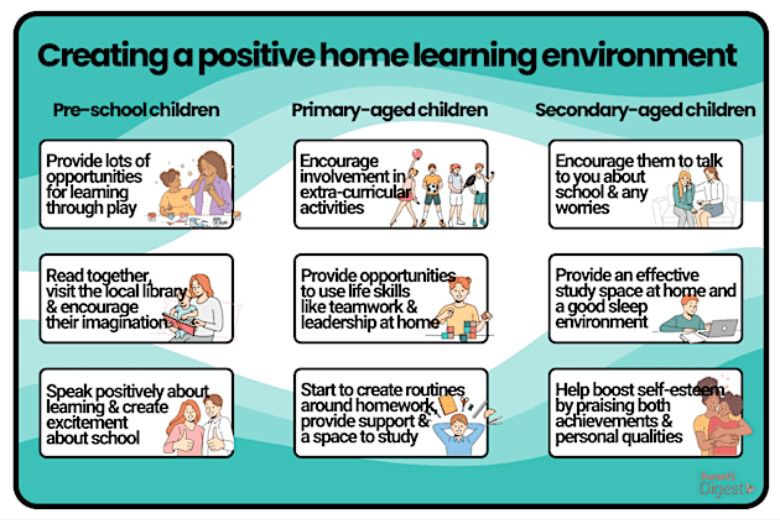
Parents give a friendly environment so that child never hesitate to talk about anything
6. Active Participation in School Life
Whether it is the Back to School season or the middle of the year, staying active in the school community is vital. It sends a message to your child that their education is a top priority for the whole family.
- Encourage them to take part in class competitions.
- Stay updated on school requirements and activities.
This shows the active participation of children in school co-curricular activities

7. Turning Failure into a Lesson
Failure is a normal part of life. Instead of punishing a bad grade, use it as a moment to motivate. Help them understand their mistakes so they can grow from them.
- Encourage hope after a setback.
- Explain that improvement is a marathon, not a sprint.

“It is easier to build strong children than to repair broken men.” — Frederick Douglass
8. Parent-Teacher Communication
Strong Parent-Teacher Communication is the final pillar of success. Attending meetings builds a bridge between home and school, ensuring everyone is on the same page for the child’s benefit.
- Ask teachers about specific strengths and weaknesses.
- Follow professional advice to improve performance at home.

Final Thoughts
By implementing these steps, you aren’t just helping with homework—you are building a confident, capable human being.