
Most parents are keen to help their children develop good habits for life. So here are some tips from a few experts on why good study habits are important and how you can help your child develop them.
What is a study habit?
Think of study habits like watering a plant. You can’t just pour a whole bucket of water on it once and expect it to grow big and strong. You need to give it water every day to help it thrive.
Study habits are the small, simple things you do regularly to help your brain grow and stay strong. They are like your personal toolkit of tricks and routines that make learning feel easier and more enjoyable. When you practice good study habits, you won’t need to worry or feel rushed when a quiz or test is coming up.

2. The difference between homework and study?
It’s common for both students and their parents to use the terms “homework” and “studying” as if they are interchangeable. When the school day ends, any academic task that follows can easily feel like just more work to get through. But in reality, these two activities serve very different purposes. Recognizing the unique role each one plays can completely change how a student manages their time after school. It also paves the way for smarter, more productive learning habits.
Though homework and studying are different activities they work together as essential parts of the learning process when students understand why they are asked to do these things they past can feel less like chores and more like meaning full steps gaining knowledge below is an exploration for the purpose behind the each one.
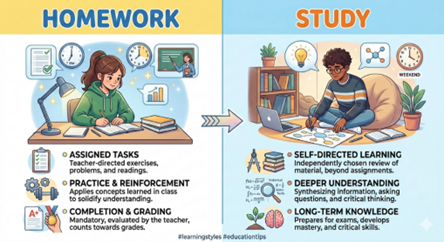
Part 1: Why Homework Matters
Homework serves several important purposes beyond simply keeping students busy after school. When used well, it supports learning in multiple ways.
Strengthening New Skill
One of the main reasons teachers assign homework is to give students a chance to practice what they have just learned. New information can fade quickly if it is not used soon after it is taught.
The Goal: To help move new knowledge from short-term memory into long-term memory.
- Example: After a lesson on solving equations, working through a few problems at home helps lock the steps into a student’s mind so they can recall them more easily later.
2. Getting Ready for Future Lessons
Sometimes homework is meant to introduce topics before they are covered in class. This approach helps students arrive with some background knowledge already in place.
- The Goal: To build a foundation that makes future classroom lessons easier to follow.
- Example: Reading a short passage about life in ancient Rome the night before a history lesson allows students to participate more confidently in class discussions.
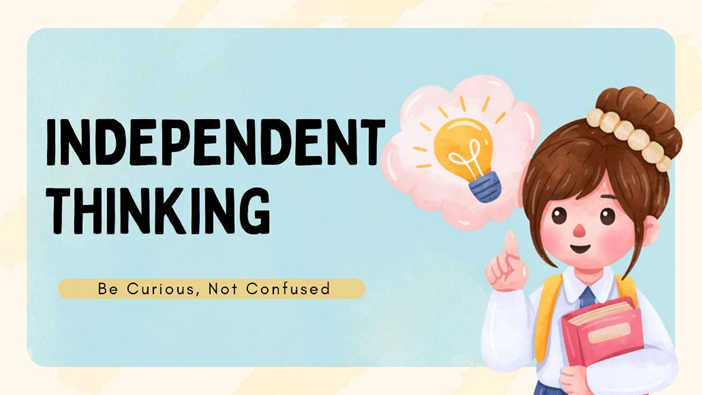
3. Encouraging Independent Thinking
Well-designed homework pushes students to think for themselves. It asks them to apply what they have learned in new or slightly different ways.
- The Goal: To move beyond simple recall and encourage students to analyze or create.
- Example: After learning about different types of poetry, an assignment might ask students to write their own short poem using one of the styles discussed in class.
4. Building Personal Responsibility
Homework also helps students develop skills that matter far beyond the classroom. Completing tasks on their own teaches them how to manage time and follow through on commitments.
- The Goal: To build habits like organization, self-discipline, and meeting deadlines.
- Example: Keeping track of multiple assignments and turning them in on time prepares students for the expectations they will face in higher education and the workplace.

Part 2: Why Studying Matters
While homework focuses on practicing specific lessons, studying has a broader purpose. It is about bringing everything together and making sure knowledge sticks for the long term.
1. Working Toward True Understanding
The main goal of studying is to reach a point where a student truly understands a subject. This means being able to explain ideas, connect them to other topics, and use them in different situations.
- The Goal: To grasp the deeper meaning behind facts and details.
- Example: Instead of just memorizing dates for a history test, studying involves understanding why those events happened and how they led to later developments.
2. Getting Ready for Major Assessments
The most common reason students study is to prepare for tests, exams, or other major evaluations. Studying pulls together everything learned over a period of time.
3. Finding and Fixing Weak Spots
Studying is an active process that reveals what a student does not yet know. Unlike homework, which usually covers material just taught, studying requires students to check their own understanding.
- The Goal: To identify areas that need more attention and focus effort where it will help most.
- Example: While reviewing vocabulary with flashcards, a student may realize they consistently struggle with a certain set of words. This tells them exactly where to spend their remaining study time.
4. Holding Onto Knowledge for the Future
Good study habits are not just about passing the next test. They are about building a foundation that will support learning in future courses and beyond.
- The Goal: To store information in a way that lasts and can be built upon later.
- Example: Mastering basic grammar rules through regular study makes it much easier to learn a new language years later, because the core concepts are already in place.
Bringing It All Together
| Homework | Studying | |
| Main Purpose | To practice and reinforce what was just taught. | To gain deep understanding and prepare for exams. |
| Time Focus | Focuses on recent lessons and short-term tasks. | Looks at the bigger picture and long-term retention. |
| Approach | Usually assigned by the teacher with clear steps. | Self-guided and shaped by the student’s own needs. |
| Key Outcome | Builds responsibility and reinforces skills. | Builds confidence and lasting knowledge. |