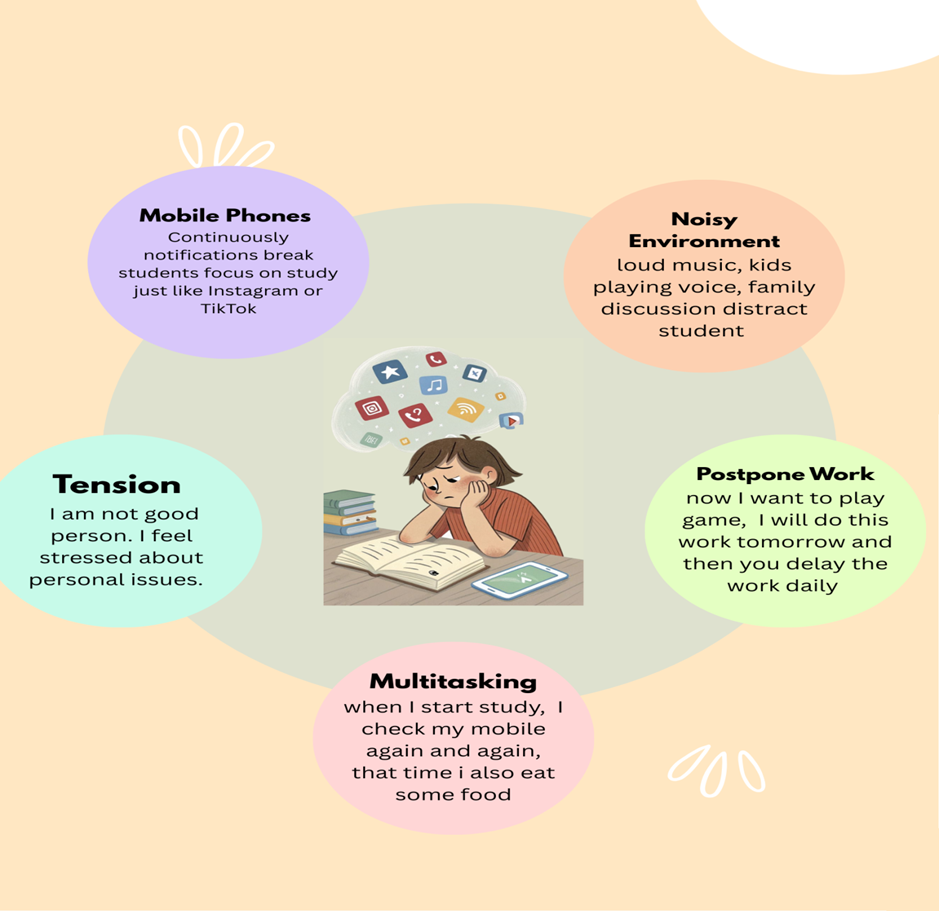
Concentration is the major factor for effective studies. Studying effectively is a big challenge for students now a day with a lot of distractions. Improving concentration includes a mixture of creating an ideal environment, using effective studying techniques, and building a healthy lifestyle. Studying with too many distractions, overwhelming workloads and the constant interaction with digital devices creates disturbance. However concentration is a skill that can be improved by taking precautionary measures. So, for this problem there are many practical ways that can help students improve their concentration and study more efficiently.

1. Step to create a catchy student environment
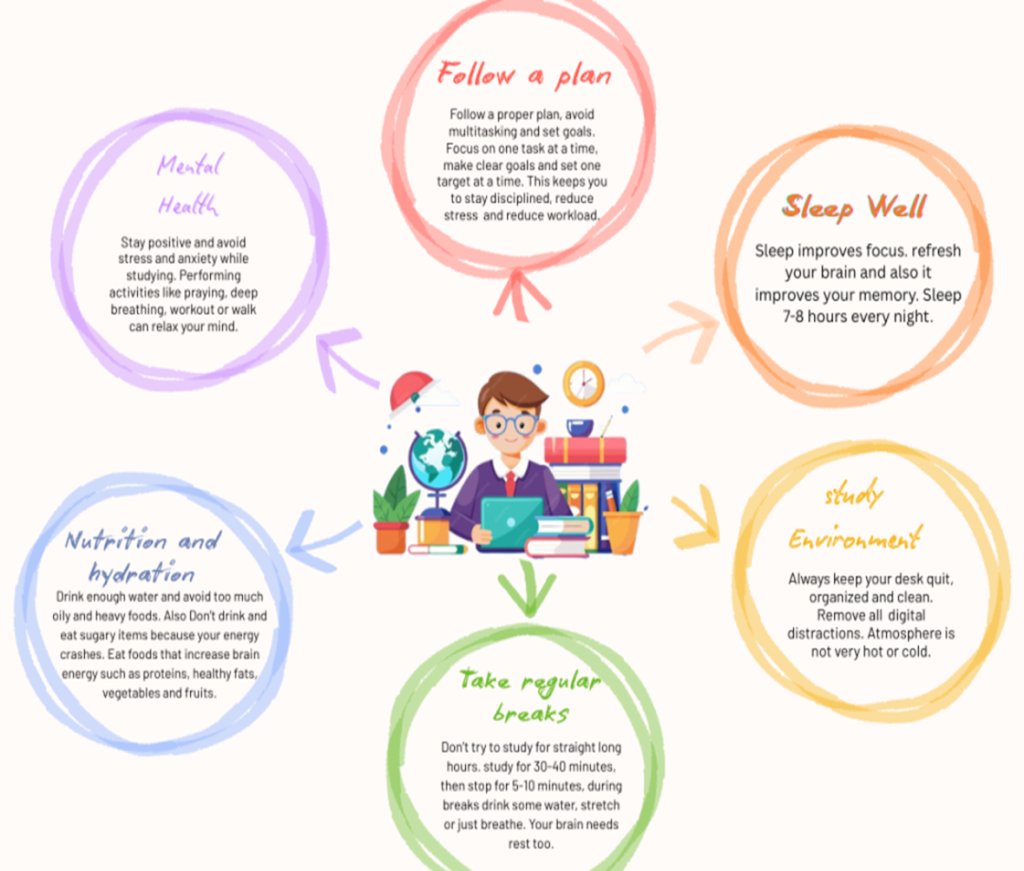
A best study environment plays an important role in concentration as a quiet clean and well organized place helps our brain to stay focused. When our surroundings are untidy and noisy that becomes very difficult for our mind to stay on the topic. To overcome these problems choose a specific place in your home where you mostly study. It is mandatory that the place should have good lightning and proper ventilation. Keep only required study materials with you like books, notebooks, stationary etc.
If there is no silent places founded to study then use earplugs or listen to instrumental music to relax your mind.

2. Step to make a study plan
One of the major reasons students lose concentration is studying without a proper schedule. When you do not have a specific plan, which subjects need much time and more effort, and then it’s difficult to study and causes stress. Create a daily routine for your studies and divide your time between different subjects according to their importance and difficulty. For example if chemistry is difficult for you, give it more time.
Your study plan should include the following :
- Have proper time management for different subjects.
- Take short breaks.
- Separate time for revision.
- Separate time to relax and sleep.
To organize your mind follow the plan then it will become easier to focus.

3.Step to set your goals
Set specific goals to improve concentration. Decide your achievements first for example I will complete three chapters of chemistry today. Small goals make study effective and develop interest.
You may use some techniques such as Pomodoro technique in this method you have to study for 25 minutes then take a 5 minute break and after 4 consecutive study sessions you will take a long break of 15 to 20 minutes.
This technique solves mental problems and helps maintain a longer time.

4.Step to avoid digital distractions.
Smartphones are one of the biggest distractions for students today. Different notifications from multiple apps and group chats interrupt study sessions. To improve concentration, keep your phone aside while studying. You can also put it in another place or switch it off. If you need your phone for study purposes use only the apps which are related to your studies. By reducing digital distractions you help your brain to stay focused.

5.Step to take Regular Breaks
Many students believe that studying for more hours increases productivity. However, research proves that the brain needs breaks to work well. Taking short breaks helps your mind to stay relaxed and improve concentration. During a break, you can stand up, stretch your body, drink water, or take a short walk. Avoid activities that may distract you too much during breaks, such as scrolling through social media or watching long videos. These activities can make it difficult to return to studying. Instead, do simple relaxing activities that help your brain recharge.

6.Use Active Learning Techniques
Passive reading may leads to poor concentration. When you only read a book without engaging with the material, your mind may start wandering. Active learning methods can help you stay focused and understand topics better.
Some effective techniques include:
- Making short notes while reading
- Highlighting important points
- Take self-assessment questions about the topic
- Teaching the concept to someone else
- Solving practice questions
These methods keep your brain learning process active, which improves both concentration and memory.

7.Stay Physically Healthy
Your physical health also affects your concentration ability. Lack of sleep, poor diet, and lack of exercise can make it difficult to stay focused while studying. Make sure you get enough sleep every night. Students usually need about 7–9 hours of sleep for proper brain functioning. Studying late at night without proper rest defects concentration and memory. Eating healthy food is also necessary. Foods such as fruits, vegetables, nuts, eggs, and whole grains provide energy to the brain. Drinking enough water also helps maintain mental alertness and helps stay hydrated. Regular physical exercise can improve blood circulation to the brain, which helps improve concentration and mood.

8.Practice Mindfulness and Meditation
Mindfulness and meditation plays an important role in improving concentration. These practices train your brain to focus on the present moment. Even a few minutes of meditation every day can improve your attention span. You can start with simple breathing exercises. Sit quietly, close your eyes, and focus on your breathing for five minutes like yoga. When your mind starts wandering, gently bring your attention back to your breath. Over time, this practice strengthens your ability to concentrate while studying.

9.Remove Negative Thoughts
Sometimes students lose concentration because of stress, anxiety, fear of exams, or negative thoughts such as “I cannot understand this subject” or “I will fail.” These thoughts reduce motivation and make it harder to focus. Instead, try to develop a positive mindset. Remind yourself that learning takes time and lots of effort. If you find a topic difficult, break it into smaller sections and try to understand it step by step. Ask teachers, classmates, or online resources like chat gpt, YouTube etc for help when needed. Believing in your ability to improve can greatly enhance your concentration and confidence level.
10.Use Effective Study Techniques
Using the right study techniques can make learning more interesting and improve concentration.
Some helpful methods include:
Spaced repetition: Review information regularly to improve memory.
Mind maps: Use diagrams to connect ideas and visualize information.
Practice testing: Test yourself regularly to check your understanding.
Summarizing: Write summaries of what you learned in your own words.
These techniques make studying more interactive and help your brain stay engaged.

11.Manage Stress and Anxiety
Stress is a major factor that affects concentration. When your mind is worried about exams, results, or personal problems, it becomes difficult to focus on studying. To manage stress, try relaxation techniques such as deep breathing, exercise, or talking with friends and family. Taking small breaks and maintaining a balanced routine also helps reduce stress. It is also important to remember that exams are only one part of life. Doing your best is more important than achieving perfect results.

12.Stay Motivated
Motivation plays a key role in concentration. When you have a strong reason to study, it becomes easier to stay focused.Think about your goals and future dreams. Whether you want to become a doctor, engineer, teacher, or entrepreneur, education is an important step toward achieving those goals.
You can also reward yourself after completing study tasks. For example, after finishing a chapter, you may allow yourself to watch a short video, eat your favorite snack, or take a relaxing break. These small rewards make studying more enjoyable and encourage you to stay focused.
Conclusion
Concentration is a key factor in successful studying. Without focus, even long hours of studying may not produce good results. However, concentration is not something people are born with; it is a skill that can be developed through practice and discipline and by the will of the person. Creating a suitable study environment, making a clear study plan, avoiding distractions, taking regular breaks, and using active learning techniques can significantly improve concentration. Maintaining good physical health, practicing mindfulness, and developing a positive mindset also play important roles in staying focused. Every student faces distractions and challenges while studying, but with the right strategies and consistent effort, it is possible to improve concentration and achieve academic success. By developing good study habits today, students can build a strong foundation for lifelong learning and personal growth.
Distractions